
About Women’s Jazz Festival
50 years in the making
The Women’s Jazz Festival is a nonprofit organization with a mission to create opportunities for an increasing number of female jazz artists and to cultivate an interest in America’s art form: jazz.
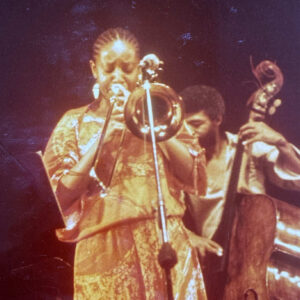
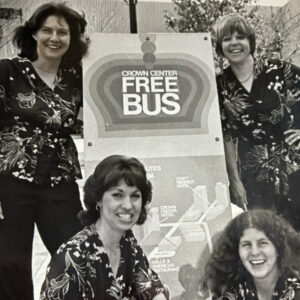
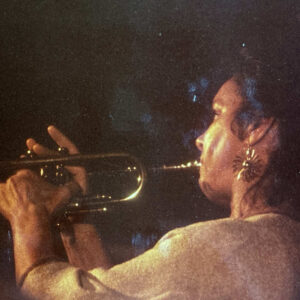
After the first Women’s Jazz Festival incorporated in 1977, the organization hosted seven festivals between 1978 and 1985 that garnered international media coverage and attendance. It was the first organization in the world to feature women artists.
The 50th Anniversary Celebration in 2028 honors this trailblazing event with concerts at The Music Hall, clinics, jam sessions, master classes, and a free screening of “The Girls in the Band.” There will also be several events and ways to get involved in 2027, including smaller concerts at the Folly Theater, weekly podcasts, fundraising events, and master classes.
We hope you’ll join us!
Learn Our History
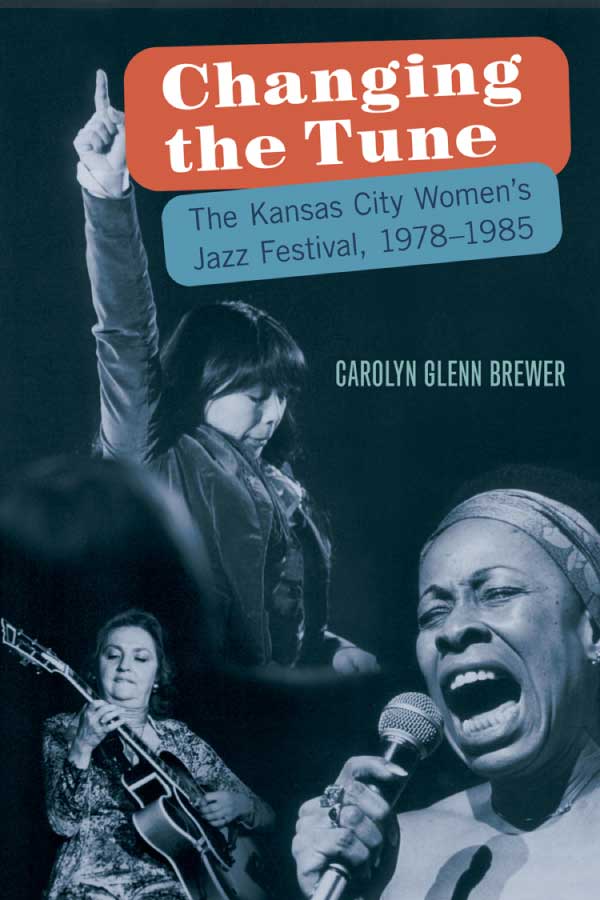
Changing The Tune
The Kansas City Women’s Jazz Festival
by Carolyn Glenn Brewer
Even though ripples caused by the potential passage of the Equal Right Amendment had cracked glass ceilings across the country, jazz remained a boys’ club. Two Kansas City women, Carol Comer and Dianne Gregg, challenged that inequitable standard. In 1978 they emphatically proved jazz genderless by creating the Kansas City Women’s Jazz Festival (WJF) thereby changing the course of jazz history.
With the support of jazz luminaries Marian McPartland and Leonard Feather, inaugural performances by Betty Carter, Mary Lou Williams, an unprecedented All-Star band of women, Toshiko Akiyoshi’s band, plus dozens of Kansas City musicians and volunteers, a casual conversation between two friends evolved into an annual event.
Melba Liston came out of retirement to play at WJF. The International Sweethearts of Rhythm reunited after forty years at WJF. Performers as diverse and Carla Bley, Cleo Laine, Jane Ira Bloom, and Joanne Brackeen shared their music with fans from all over the country. Jam sessions, clinics, student band performances, and Top New Talent concerts all complimented the Sunday night Main Concerts. Playing on a WJF stage always meant a female musician no longer felt she had to “play like a man,” but could proudly play as a woman.
But with success came controversy. Anxious to satisfy fans of all jazz styles, WJF alienated some purists. The inclusion of male sidemen brought on protests. The egos of established, seasoned players unexpectedly clashed with those of newcomers.
Undaunted, Comer, Gregg, and WJF’s ensemble of supporters continued the cause. They fought for equality not with speeches but with swing, without protest signs but with bebop.
Changing the Tune is published by University of North Texas Press.
Meet the Board of Directors
These are the folks helping to make the 50th Anniversary Celebration happen. Interested in volunteering? Let us know at womensjazzfest50@gmail.com.
Executive Committee
- Dianne Gregg, President
- Eboni Fondren
- Julie Metzler
- Kathy Peterson
- Kelly Morgan
- Ashley Morgan
- Laura Klavon
- Lisa Henry
- Rick Hellman
Board of Directors
- Brad Shaw
- Chris Miller
- Denise Phillips
- Gerald Dunn
- Harriet Lawrence
- Keith Kavanaugh
- Kristina Ning
- Lee Kavanaugh
- Mike Metheny
- Millie Nottingham
- Pam Watson